








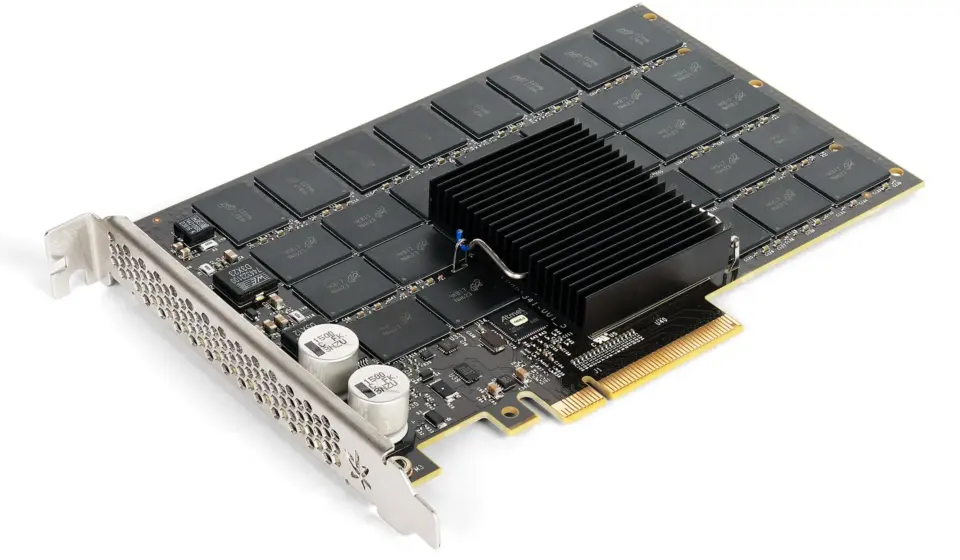
Sandisk and Western Digital Weakness Creates an Opening for…
Sandisk and Western Digital delivered strong quarterly results Wednesday night. Investors sold both stocks anyway.
Sandisk reported record fiscal fourth-quarter revenue of $8.97 billion, up 372% from the previous year, while adjusted earnings reached $39.25 per share, compared with $0.29 a year earlier. Western Digital generated $3.75 billion in revenue, up 44%, and lifted its adjusted gross margin to 54.4%. Both companies exceeded Wall Street’s quarterly forecasts.
The initial reaction was brutal. Sandisk fell as much as 13.3% during Thursday’s session, while Western Digital lost as much as 19.1%. Both recovered from their intraday lows, leaving Sandisk at $1,286.20, down 4.8%, and Western Digital at $460.98, down 11.2%, at the August 6 close.
The earnings were not weak. The problem was that the results and outlook failed to clear expectations that had risen even faster than the companies’ profits.
For bitcoin, the selloff matters because AI and semiconductor stocks have absorbed a large share of speculative capital during 2026. A sustained reversal in that trade could eventually free capital for crypto. Thursday’s price action, however, is not yet evidence that such a rotation has begun.
Sandisk Beat Estimates but Failed to Deliver Another Shock
Sandisk’s quarter was stronger than the market expected. Revenue of $8.97 billion exceeded the roughly $8.4 billion consensus, while adjusted earnings of $39.25 surpassed forecasts near $34.50. Two-thirds of its sequential revenue growth came from higher pricing, with the remaining third coming from increased volume.
Data-center revenue more than doubled sequentially to $2.98 billion. For the full fiscal year, Sandisk’s data-center business grew 437%, establishing AI storage as a central part of the company rather than a small additional market.
The first-quarter guidance was more complicated than a straightforward miss.
Sandisk forecast revenue between $10.3 billion and $10.8 billion, with adjusted earnings of $44 to $46 per share. The $10.55 billion revenue midpoint and $45 earnings midpoint were above the LSEG estimates of $10.47 billion and $43.12 cited immediately after the report. Other data services carried higher estimates, including revenue near $10.8 billion and earnings around $45.34.
The correct conclusion is therefore not that Sandisk’s outlook clearly missed consensus. It failed to exceed the most aggressive expectations embedded in a stock that had already risen several thousand percent over the preceding year.
Investors also focused on gross margin. Sandisk expects an adjusted margin of 83% to 85% in the September quarter, compared with 84.6% in the fourth quarter. The midpoint indicates slight sequential compression despite another expected increase in revenue.
That was enough to raise questions about whether NAND price growth is beginning to moderate after an extraordinary run.
Western Digital’s Guidance Was Not Weak
The claim that Western Digital fell because of disappointing guidance is even harder to support.
The company forecast first-quarter revenue of $4.1 billion, plus or minus $100 million, adjusted earnings of $4 per share, plus or minus $0.15, and an adjusted gross margin between 55% and 56%. Wall Street had expected approximately $4.06 billion in revenue and $3.84 in adjusted earnings.
At the midpoint, every major element of the guide was above consensus.
Western Digital’s stock fell because investors wanted a much larger beat after the shares had gained more than 600% over the previous 12 months before the report. Analysts also pointed to exabyte shipments rising 22% year over year, below the company’s longer-term 25% growth objective, and comparisons with Seagate, which had recently delivered stronger growth and margin expectations.
The result was a classic expectations correction. Strong fundamentals remained intact, but they were no longer improving quickly enough to justify the most optimistic assumptions.
Both Stocks Had Already Lost Momentum Before Earnings
The post-earnings declines did not begin from record highs.
Sandisk reached an intraday peak of $2,354.39 on June 22. At Thursday’s closing price, it was approximately 45% below that high. Western Digital reached an intraday record of $799.87 on June 18 and finished Thursday about 42% below it.
The description that both stocks are roughly 50% below their records is therefore directionally close for Sandisk but overstates Western Digital’s decline.
The magnitude of the previous rallies explains the market’s intolerance for merely strong numbers. Sandisk had risen by roughly 3,000% over 12 months before the latest pullback, while Western Digital had gained more than 500%. Reuters estimated that Sandisk had risen more than fivefold during 2026 alone and Western Digital had more than tripled.
Investors were not valuing the businesses on present earnings alone. They were paying for continuing upgrades to NAND prices, margins, enterprise-storage demand and long-term earnings estimates.
Once the size of those upgrades began to slow, the multiples contracted.
Sandisk’s Buyback Shows the Cash Generation Is Real
Sandisk’s board approved an additional $14 billion share-repurchase program, increasing the company’s remaining authorization to $15.5 billion.
The authorization is important because it separates the current cycle from a rally based entirely on distant AI forecasts. Sandisk is producing substantial cash now and has the balance-sheet capacity to return part of it to shareholders.
It has also signed eight long-term supply agreements with six customers carrying commitments of at least $93.9 billion. Half of its fiscal 2027 production and two-thirds of its fiscal 2028 output are expected to be sold through these arrangements.
Those contracts could reduce the severity of the traditional NAND boom-and-bust cycle. They do not eliminate the valuation risk created when investors price the shares as though high-80% gross margins and rapid price increases will continue indefinitely.
Does the AI Selloff Mean Capital Is Rotating Into Bitcoin?
There is a reasonable foundation for the rotation argument.
Earlier in 2026, investors moved heavily toward AI and semiconductor stocks while withdrawing capital from bitcoin products. Reuters reported in June that more than $21 billion had entered major semiconductor exchange-traded funds during the year, while bitcoin ETFs had suffered more than $3.1 billion in net outflows.
If AI winners stop producing positive returns despite strong earnings, their opportunity cost rises. Investors may begin looking again at assets that were left behind, including bitcoin and precious metals.
Thursday offered limited evidence of that process. Bitcoin traded near $64,400 at 7 p.m. GMT, holding its ground while the memory sector sold off. It also remained relatively stable after the Coldcard wallet exploit removed roughly 1,816 BTC, valued near $114 million at the time, from thousands of addresses.
That resilience is constructive, but it is not the same as a confirmed inflow of capital from AI stocks.
Bitcoin was little changed on the day and remained far below its October 2025 record. If investors had aggressively moved money from Sandisk and Western Digital into crypto, bitcoin would probably have shown a more decisive price and volume response.
Gold provided a clearer defensive signal, although its recent increase was smaller than 7%. Gold closed near $4,074 on August 3 and traded around $4,234 late Thursday, an increase of approximately 4%. It briefly reached a seven-week high before reversing lower as oil prices and rate expectations changed.
What Bitcoin Needs to Confirm the Rotation
The Sandisk and Western Digital selloffs weaken the idea that AI-related stocks are an automatic destination for new capital. They show that even exceptional revenue growth and expanding margins may not protect stocks when expectations have become extreme.
That creates an opening for bitcoin, but three conditions would provide stronger evidence of an actual rotation.
Bitcoin would need to break decisively above its recent $65,000 resistance area, spot bitcoin ETFs would need to return to sustained net inflows, and semiconductor weakness would need to extend beyond a one-day post-earnings reaction.
Until then, the divergence is best described as a change in relative momentum rather than a confirmed transfer of capital.
Sandisk and Western Digital did not collapse because AI storage demand disappeared. They fell because investors had priced in results even stronger than the record numbers the companies delivered.
For bitcoin, that is potentially useful. The AI trade is becoming harder to satisfy. But holding $64,000 while memory stocks fall is only the first condition for a rotation—not proof that the money has arrived.